 TürkiyeCennet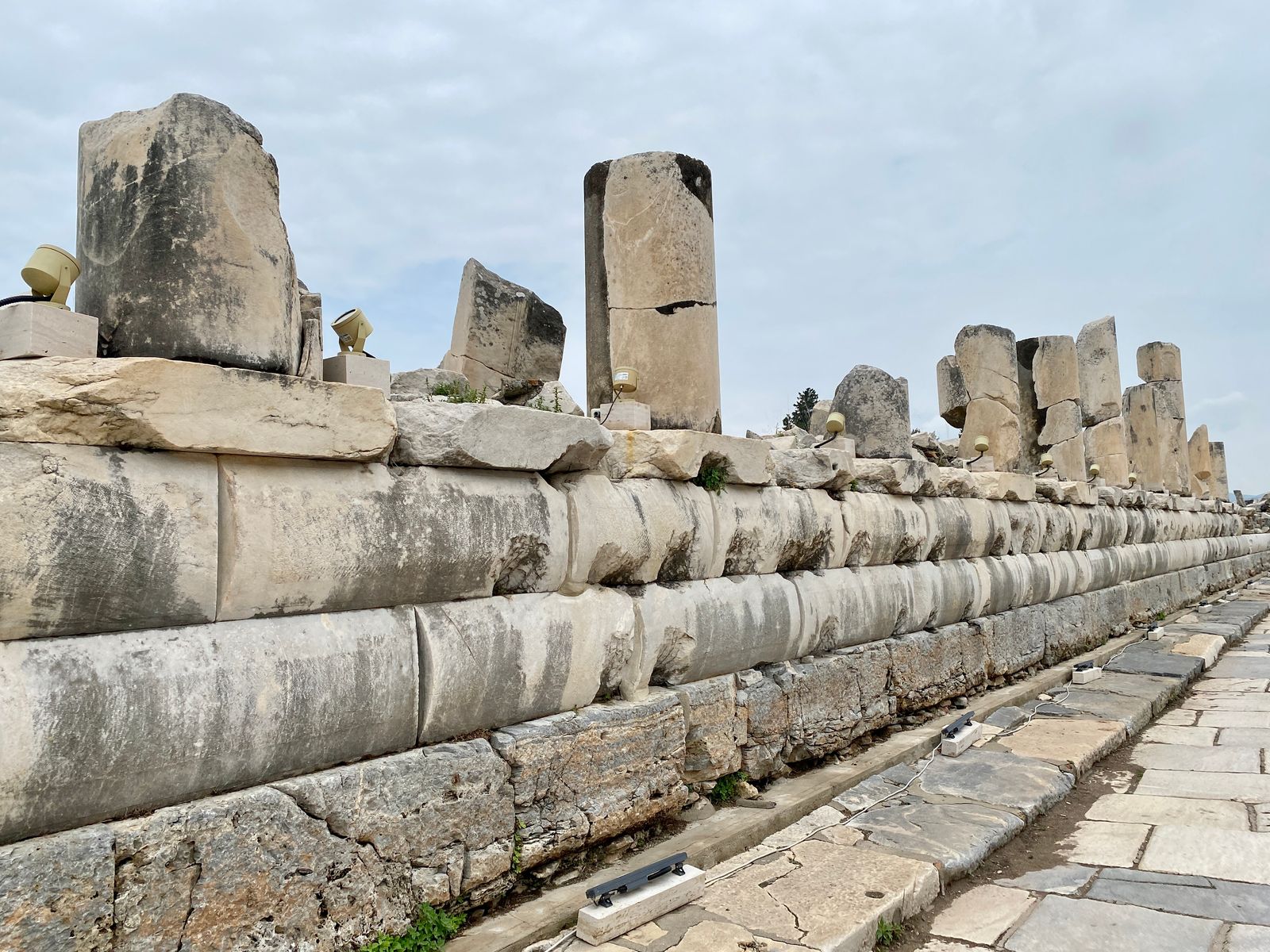
Ephesus
Aegeanİzmir37.9395, 27.3417
Photo: Warren LeMay from Chicago, IL, United States · CC BY-SA 2.0 · source
In Selçuk near İzmir, one of the ancient world's best-preserved harbour cities, with marble streets and the Library of Celsus.
Why go
Ephesus is one of the best-preserved cities of the ancient world. Its marble-paved streets, the two-storey façade of the Library of Celsus and the great theatre set into the hillside still convey what it felt like to walk through a Roman harbour city. The site was inscribed on the UNESCO World Heritage List in 2015.
Historical context
The city grew beside a coastline that shifted over the centuries; as its harbour silted up, the sea retreated kilometres from where it once lapped the docks. In Hellenistic and Roman times Ephesus was among the Aegean’s most important centres of trade and belief. The nearby Temple of Artemis, the Artemision, was counted among the Seven Wonders of the ancient world; today only a few traces of it remain.
What you will see
The main route begins at the upper gate and descends toward Harbour Street. Along the way you pass the Library of Celsus, the agora, bath complexes, the terraced houses and a great theatre that once seated around twenty-five thousand people. The terraced houses are a separately ticketed, roofed section that shows wealthy Roman domestic architecture together with its mosaics and frescoes.
How to get there
Ephesus lies about 3 kilometres from the district town of Selçuk and is easily reached from İzmir by train or car. The nearest airport is İzmir Adnan Menderes. The site has two gates; entering at the upper gate and leaving from the lower one makes most of the walk downhill. The path is largely flat and stone-paved.
When to visit
Spring and autumn are the most balanced seasons. Because the site is large and offers little shade, summer middays can be very hot; early morning or late afternoon is more comfortable. A hat, water and comfortable shoes help. Entry fees and hours can change, so it is worth checking current details from an official source before you go.
Responsible visiting
The marble streets and structures of Ephesus have stood in the open air for centuries, and many of them are fragile. Staying on the marked route, not touching columns or reliefs, and following guide and sign warnings in roofed sections such as the terraced houses all matter for both visitor safety and the protection of the remains. The ground is uneven and slippery in places; walking without hurry and outside the busiest hours is both safer and more enjoyable. Depending on excavation and maintenance work, some sections may be temporarily closed.
Nearby
Selçuk, with its castle, the Basilica of St John and its museum, fits easily into the same day. The House of the Virgin Mary sits on a nearby hill, while the village of Şirince, with its stone houses and vineyards, is a much-loved stop a short drive away.
Sources and last reviewed
- Efes UNESCO Dünya Kültür Mirası Listesinde — Republic of Türkiye Ministry of Culture and Tourism — İzmir Directorate
- Efes — Republic of Türkiye Ministry of Culture and Tourism — Culture Portal
Last reviewed:
Fees, hours and seasonal rules can change; confirm with the official source before visiting.
- Best time
- Spring and autumn; summer middays are very hot and shadeless.
- How to get there
- About 3 km from central Selçuk; nearest airport İzmir Adnan Menderes.
- Coordinates
- 37.9395, 27.3417
- Nearby
- Selçuk · House of the Virgin Mary · Şirince · Artemision
Places nearby
Within about 50 km of here:
Places in this region
Aphrodisias
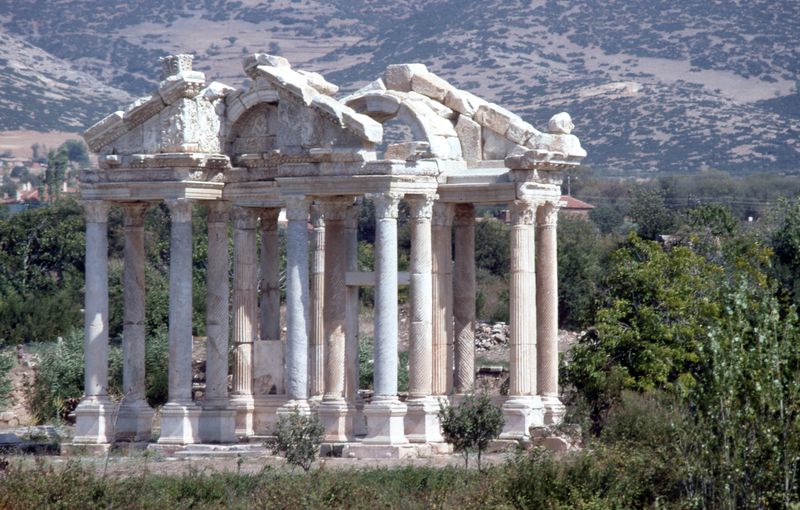
Inland from Aydın, a city of sculptors dedicated to the goddess of love, where a stadium for 30,000 survives almost intact — the best-preserved ancient stadium in Anatolia.
Pergamon (Bergama)
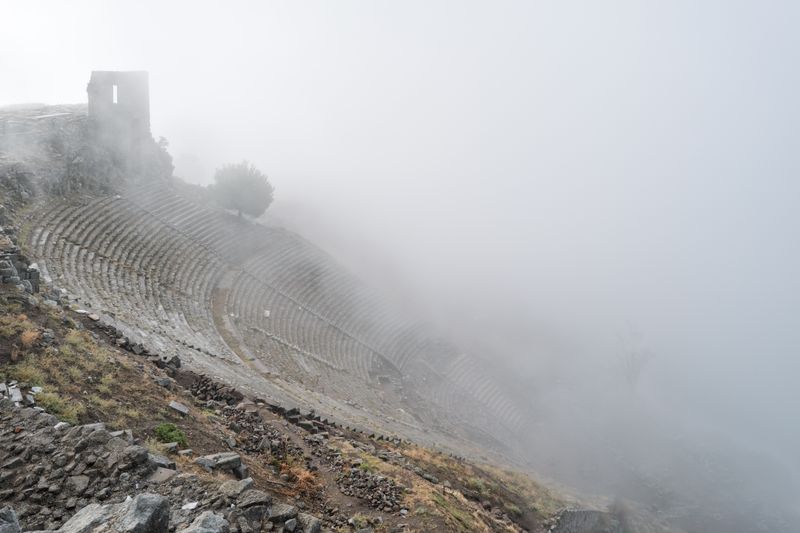
North of İzmir, a Hellenistic capital built along the spine of a steep hill: the steepest ancient theatre known, the library that gave us the word parchment, and an ancient healing centre on the plain below.
Bodrum
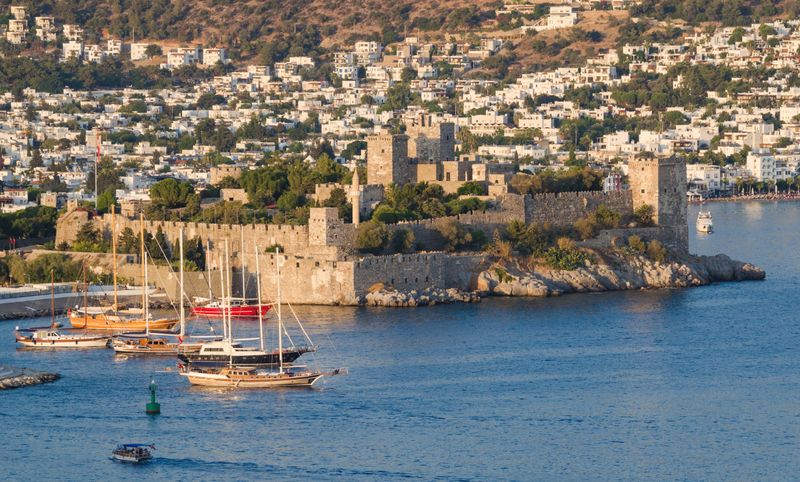
A whitewashed harbour town built over ancient Halicarnassus: the site of one of the seven wonders of the ancient world, and a crusader castle housing a museum of underwater archaeology.