 TürkiyeCennet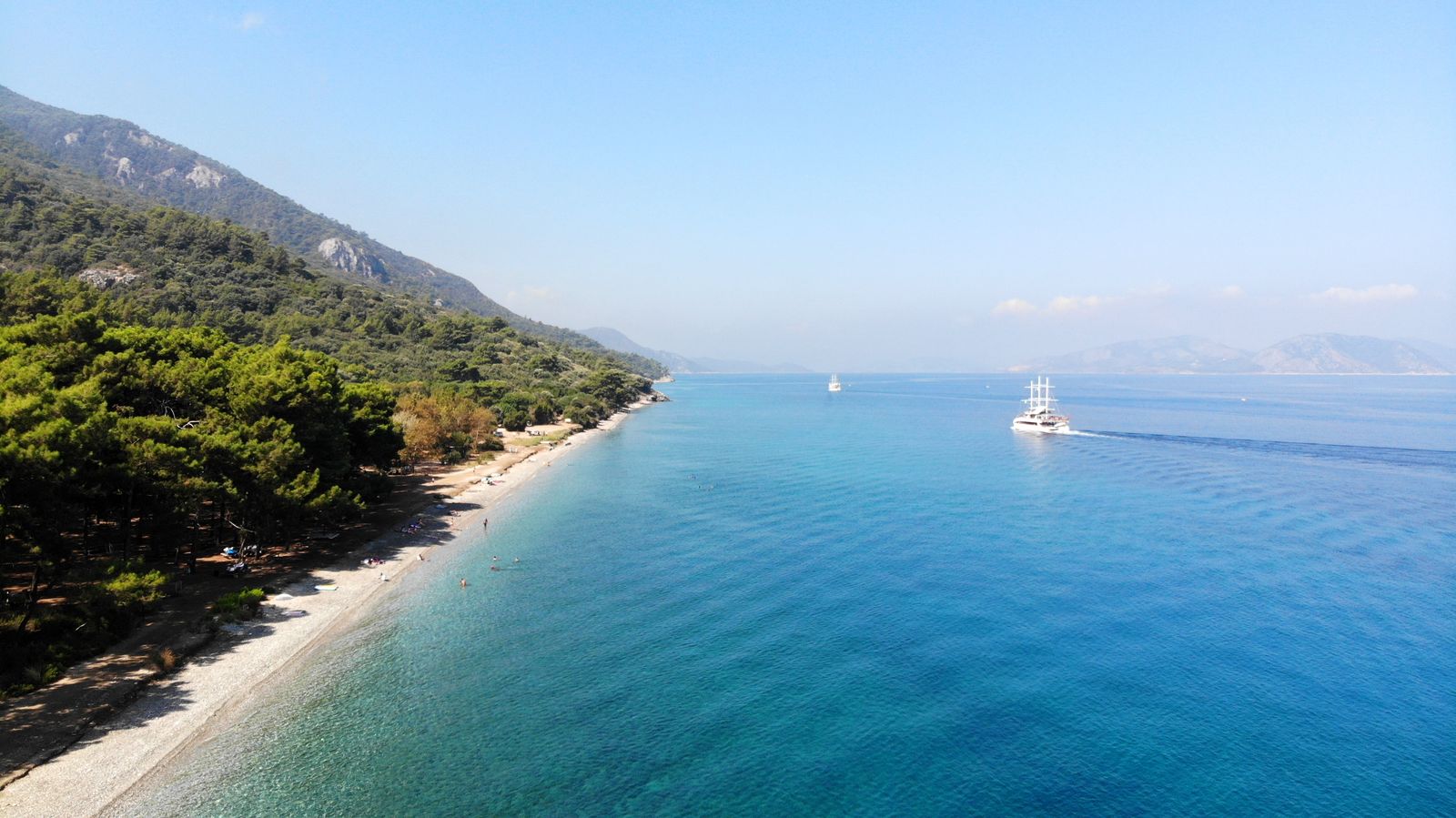
Dilek Peninsula National Park
AegeanAydın37.6906, 27.1583
Photo: Arda Gunduz · CC BY-SA 4.0 · source
South of Kuşadası, a protected peninsula facing the Greek island of Samos: undeveloped pebble coves, pine forest running down to the water, and some of the richest coastal wildlife in Türkiye.
Why go
Most of the Aegean coast has been built on. The Dilek Peninsula is the largest piece of it left intact: a headland reaching into the sea just south of Kuşadası, the whole of it under national park protection. Instead of a line of hotels you get roughly twenty kilometres of coast where pine forest runs straight down to pebble coves and stops at the water.
Across the strait sits the Greek island of Samos. The channel is narrow enough that on a clear day you can pick out houses on the far shore; at the tightest point the two coasts are barely more than a kilometre and a half apart.
The park is administered together with the Büyük Menderes Delta, and that pairing — mountain forest on one side, wetland on the other — is what makes it one of the biologically richest coastal areas in the country. Wild boar, jackal and badger are common in the forest, while the delta side supports large numbers of water birds, flamingos among them.
The coves
Past the entrance a single road follows the coast and calls at four main coves. All are pebble, all are clear, and none has anything built on it.
İçmeler is nearest the gate and the busiest. Aydınlık is wider and calmer. Kavaklıburun and Karasu lie further along the road and stay the emptiest — drive on a little and you leave most of the crowd behind.
Beyond Karasu the road is generally closed to traffic and becomes walking country. Waymarked trails run through the forest and up into a canyon behind the coast.
The Cave of Zeus
Just outside the park entrance, in Güzelçamlı, is the Cave of Zeus: a small cave pool where fresh and salt water mix. Legend has it that Zeus hid here. It is a small thing and it gets busy, but it is five minutes well spent on the way in.
Visiting
The park charges admission, with a separate fee per vehicle. In summer, and particularly at weekends, the vehicle quota can fill and entry is halted for a time — arriving early in the morning is the reliable approach. There are kiosks at the coves but the choice is limited, so bringing food and water is sensible.
Check current opening hours, fees and any closures at tabiat.gov.tr before setting out. Sections may be closed during summer because of fire risk, and lighting a fire is prohibited under all circumstances.
Sources and last reviewed
- Tabiat — protected areas and visitor information — Republic of Türkiye Ministry of Agriculture and Forestry
- Aydın Provincial Directorate of Culture and Tourism — Republic of Türkiye Ministry of Culture and Tourism
Last reviewed:
Fees, hours and seasonal rules can change; confirm with the official source before visiting.
- Best time
- May–June and September–October; the coves are very busy in high summer, so go on a weekday.
- How to get there
- 28 km from Kuşadası, 2 km from Güzelçamlı. One road runs along the coast past the coves.
- Coordinates
- 37.6906, 27.1583
- Nearby
- Güzelçamlı · Kuşadası · Priene · Söke
Places nearby
Within about 50 km of here:
- Ephesus32 km
Places in this region
Aphrodisias
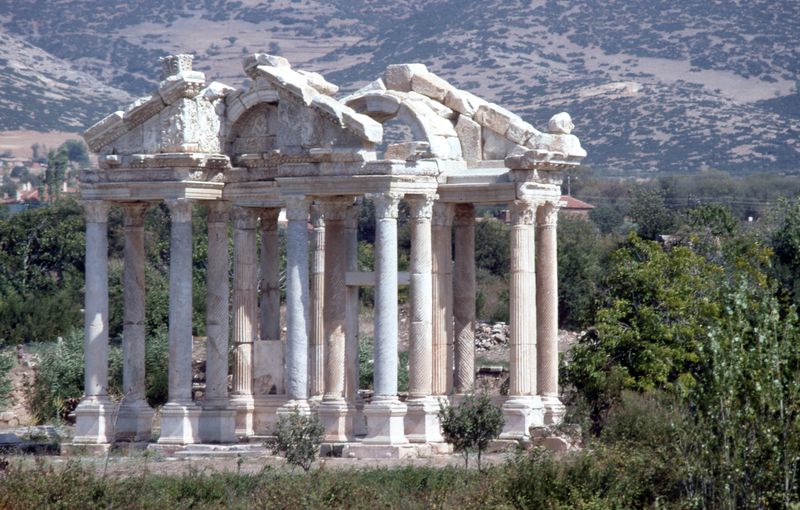
Inland from Aydın, a city of sculptors dedicated to the goddess of love, where a stadium for 30,000 survives almost intact — the best-preserved ancient stadium in Anatolia.
Pergamon (Bergama)
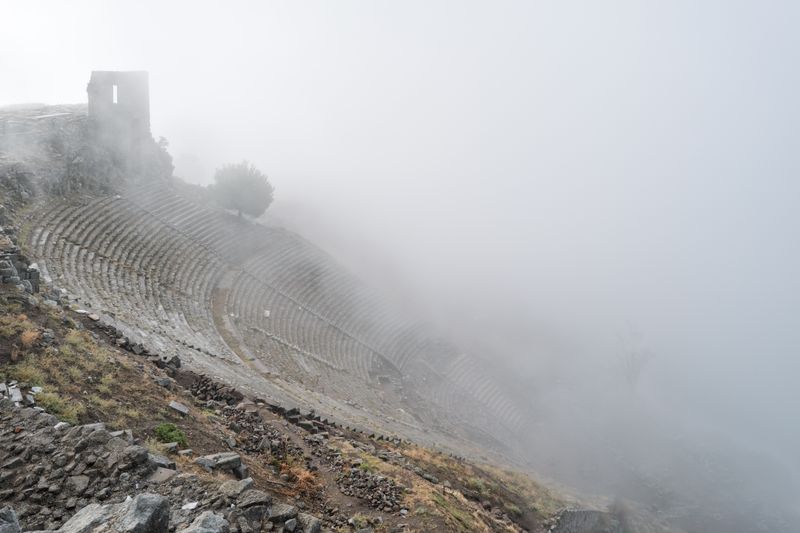
North of İzmir, a Hellenistic capital built along the spine of a steep hill: the steepest ancient theatre known, the library that gave us the word parchment, and an ancient healing centre on the plain below.
Bodrum
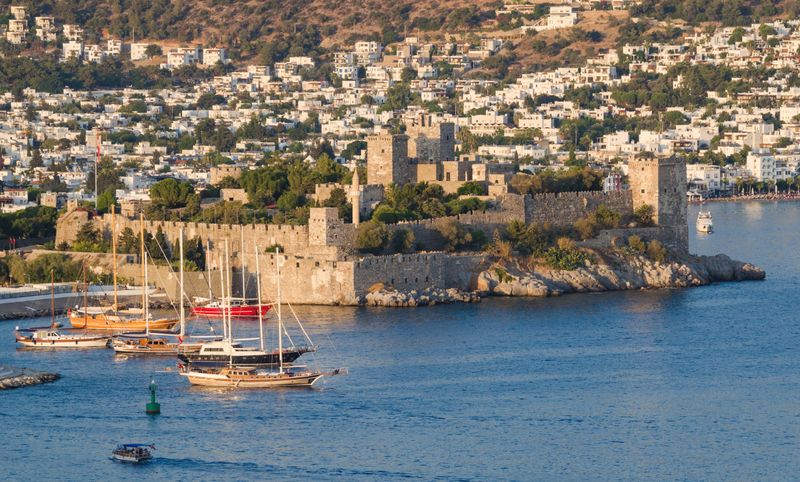
A whitewashed harbour town built over ancient Halicarnassus: the site of one of the seven wonders of the ancient world, and a crusader castle housing a museum of underwater archaeology.