 TürkiyeCennet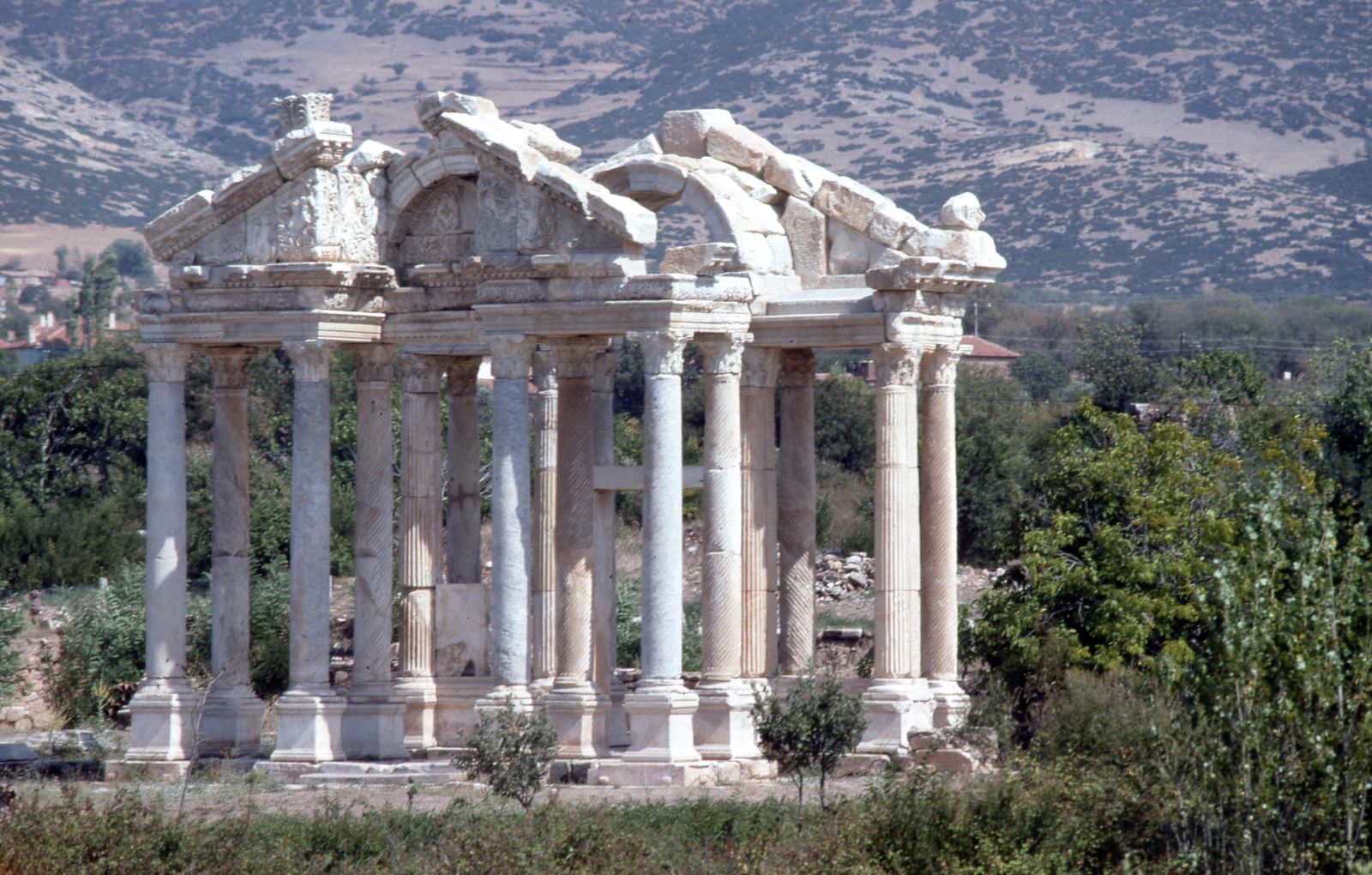
Inland from Aydın, a city of sculptors dedicated to the goddess of love, where a stadium for 30,000 survives almost intact — the best-preserved ancient stadium in Anatolia.
Why go
Aphrodisias is one of the largest ancient cities in the Aegean and one of the least crowded, which is precisely its advantage. At Ephesus you move with the flow of people. Here you can often stand alone in front of a temple, which changes what the place feels like entirely.
The city takes its name from Aphrodite and was known across the Roman world for the goddess’s cult. But what really sets it apart is something else: this was a city of sculptors. Marble quarries in the hills immediately above the site supported a school of sculpture that ran for centuries, and works signed by Aphrodisian sculptors have been found all over the Roman Empire. The result is a density of statuary and carved relief far beyond what a city of this size would normally leave behind.
What to see
The stadium is the signature. Roughly 270 m long, seating around 30,000, and standing almost complete — the best-preserved ancient stadium in Anatolia. Its scale only registers once you walk inside and sit down on the tiers.
The Tetrapylon, the monumental four-way gateway, has been re-erected from its fallen pieces and is the most photographed structure on the site. The Temple of Aphrodite, later converted into a basilica, still stands in colonnade. The Sebasteion, a building dedicated to the imperial cult, is famous for the relief panels of mythological and imperial scenes that lined it.
The Aphrodisias Museum sits inside the site and should not be skipped. It holds the original Sebasteion reliefs, the city’s finest statues, and — unusually — unfinished pieces straight from the sculptors’ workshops. Seeing work abandoned midway is a rare document of how the stone was actually cut.
Visiting
The site is large and, unlike most Aegean ruins, partly wooded, so there is real shade — which makes a summer visit more bearable than at Ephesus or Patara. A tractor-drawn shuttle runs from the car park to the entrance.
The village of Geyre sits right beside the site. The old village stood directly on top of the ancient city and was relocated during the 20th century to allow excavation. Pamukkale is about an hour away, and pairing the two on one route makes good sense.
Worth knowing
Aphrodisias was inscribed on the UNESCO World Heritage List in 2017, and the inscription covers not only the city but the marble quarries that supplied it — a deliberate choice that explains why the place became a centre of sculpture in the first place. Excavation is ongoing, so parts of the site may be fenced off at any given time.
Sources and last reviewed
- Aphrodisias — UNESCO World Heritage Centre
- Aydın Provincial Directorate of Culture and Tourism — Republic of Türkiye Ministry of Culture and Tourism
Last reviewed:
Fees, hours and seasonal rules can change; confirm with the official source before visiting.
- Best time
- April–June and September–October; the interior gets very hot in high summer.
- How to get there
- About 100 km from Aydın and 100 km from Denizli. Public transport is sparse; a car is advisable.
- Coordinates
- 37.7086, 28.7244
- Nearby
- Geyre · Karacasu · Pamukkale · Denizli
Places nearby
Within about 50 km of here:
Places in this region
Pergamon (Bergama)
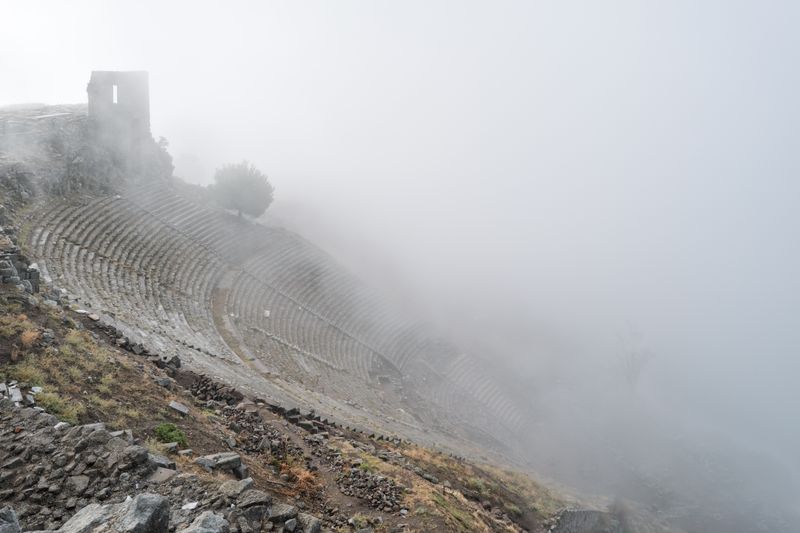
North of İzmir, a Hellenistic capital built along the spine of a steep hill: the steepest ancient theatre known, the library that gave us the word parchment, and an ancient healing centre on the plain below.
Bodrum
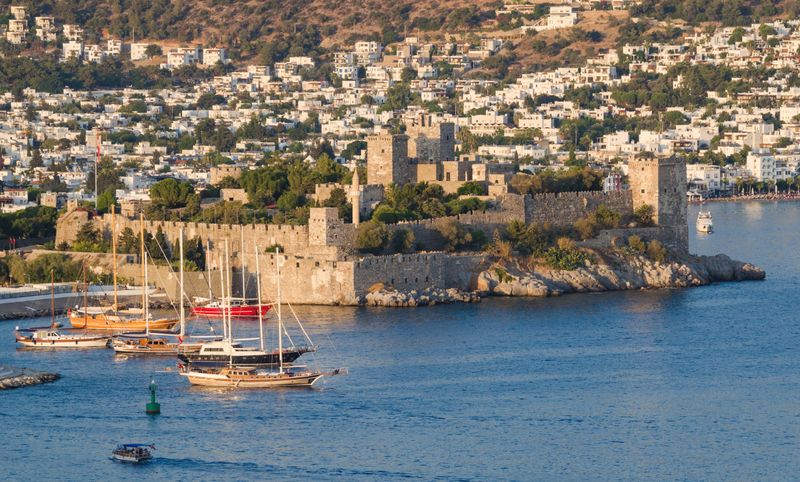
A whitewashed harbour town built over ancient Halicarnassus: the site of one of the seven wonders of the ancient world, and a crusader castle housing a museum of underwater archaeology.
Çeşme
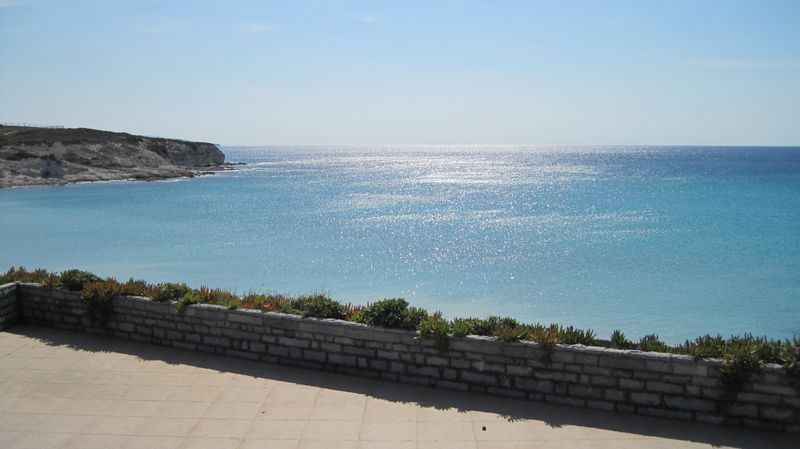
At İzmir's western tip, an Aegean coastal town of clear coves, windsurfing and the stone houses of Alaçatı.