 TürkiyeCennet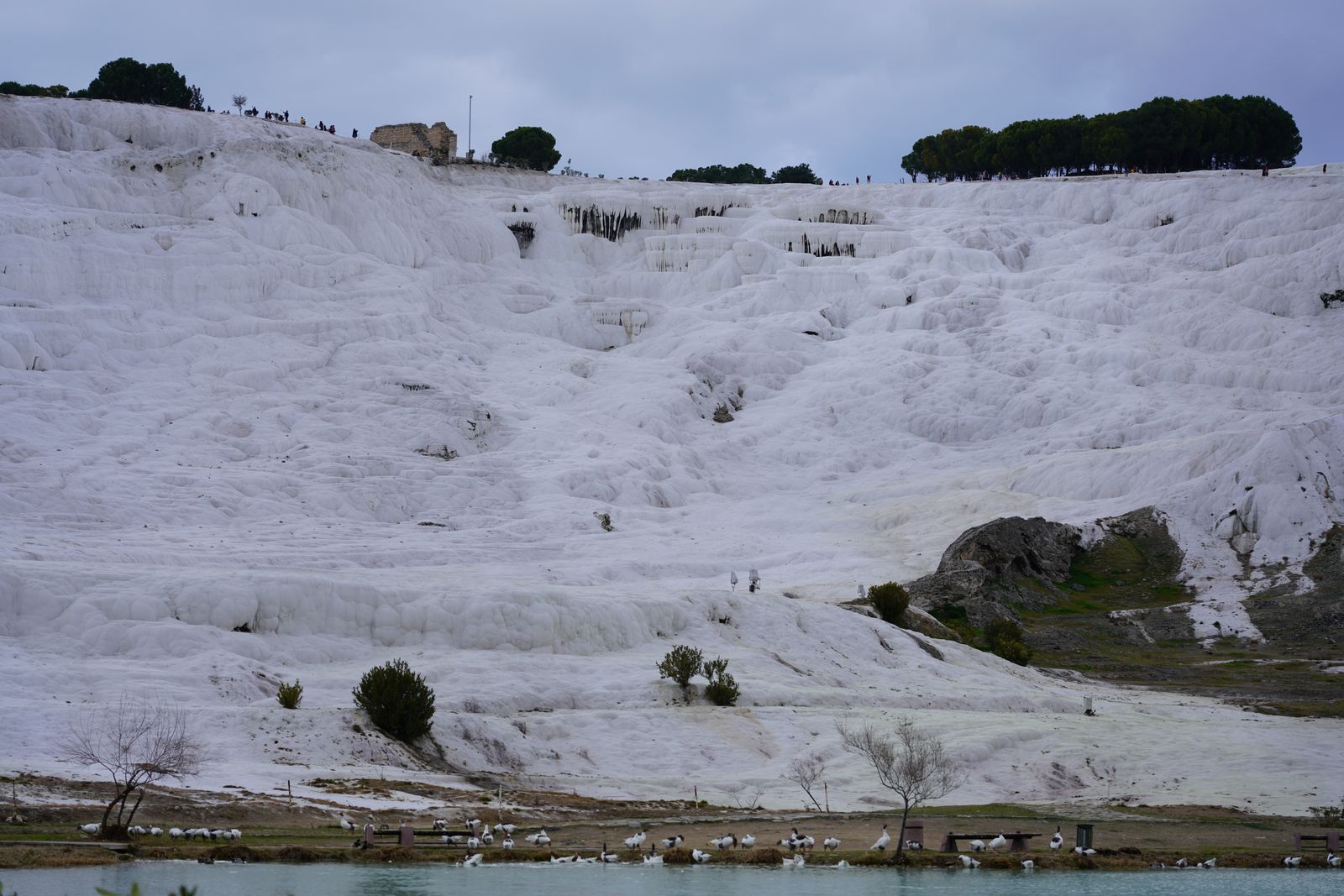
Pamukkale and Hierapolis
AegeanDenizli37.9203, 29.1206
Photo: Ray Swi-hymn from Sijhih-Taipei, Taiwan · CC BY-SA 2.0 · source
In Denizli, a UNESCO site where the white travertine terraces built by thermal springs meet the ancient city of Hierapolis above them.
Why go
Pamukkale is known for its brilliant white travertine terraces, formed as calcium-rich thermal water rising from underground deposited its minerals over centuries. Directly above this natural formation lies the ancient city of Hierapolis. Because it carries both natural and cultural value, the site was inscribed on the UNESCO World Heritage List in 1988.
Historical context
Hierapolis grew as a centre of health and belief, where the thermal waters were used for healing. Expanding through the Roman and Byzantine periods, the city was one of the region’s important settlements, with its theatre, baths and a wide necropolis. The travertines, meanwhile, are a living geological process that has been forming for thousands of years and continues today.
What you will see
The travertine terraces are visited along a set route; to protect them, some sections are entered barefoot. Above, you find the great theatre of Hierapolis, the Temple of Apollo, the ruins of the baths and the antique pool. Stretching beyond the city, the necropolis is one of the largest ancient cemeteries in Anatolia.
How to get there
Pamukkale lies about 20 kilometres from central Denizli and is easily reached by car. The nearest airport is Denizli Çardak; many visitors arrive in Denizli by bus or plane and complete the last stretch by shared minibus or car. The travertine route is on a scale that is walked on foot.
There are two entrances to the site: the lower south gate and the upper north gate. Entering from above and walking down through the travertines makes most of the walk easier. Because the site is large, it is worth setting aside a few hours to combine Hierapolis with the terraces, and on hot days a hat, water and comfortable shoes help.
When to visit
Spring and autumn are the most balanced seasons for both temperature and crowds. Summer middays can be hot and busy; early mornings are calmer. On the travertines the surface can be wet and slippery, so it is important to walk carefully.
Responsible visiting
The travertines are a fragile, living formation; walking only on the permitted route, staying within marked areas and avoiding anything that could harm the water are all necessary to protect the site. The structures of Hierapolis, too, have stood in the open air for centuries, so it matters not to climb on the remains. It is worth checking current visiting conditions from an official source.
Nearby
Karahayıt, known for its reddish waters, is a short drive away. The ancient city of Laodikeia is another nearby site that fits into the same day, while central Denizli is the region’s hub for transport and accommodation.
Sources and last reviewed
- Pamukkale — Hierapolis, Denizli — Republic of Türkiye Ministry of Culture and Tourism — General Directorate of Cultural Heritage and Museums
- Hierapolis-Pamukkale — UNESCO World Heritage Centre
Last reviewed:
Fees, hours and seasonal rules can change; confirm with the official source before visiting.
- Best time
- Spring and autumn; summer is crowded and hot.
- How to get there
- About 20 km from central Denizli; nearest airport Denizli Çardak.
- Coordinates
- 37.9203, 29.1206
- Nearby
- Denizli · Karahayıt · Laodikeia
Places nearby
Within about 50 km of here:
- Aphrodisias42 km
Places in this region
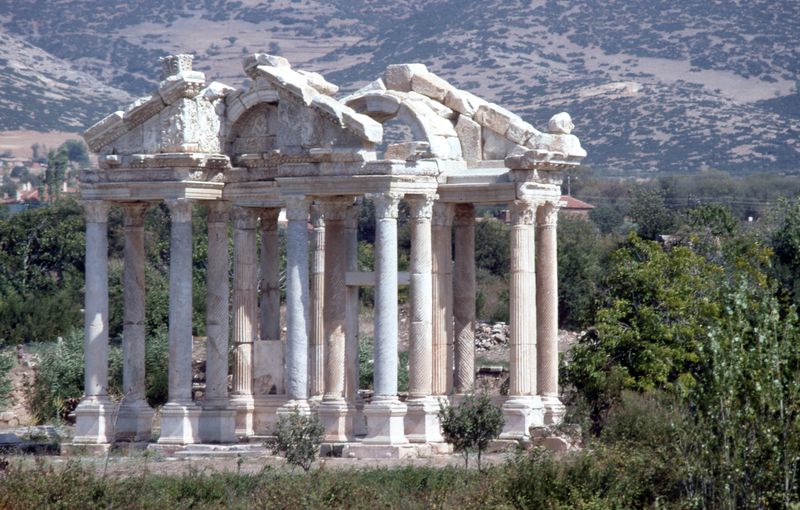
Aphrodisias
Inland from Aydın, a city of sculptors dedicated to the goddess of love, where a stadium for 30,000 survives almost intact — the best-preserved ancient stadium in Anatolia.
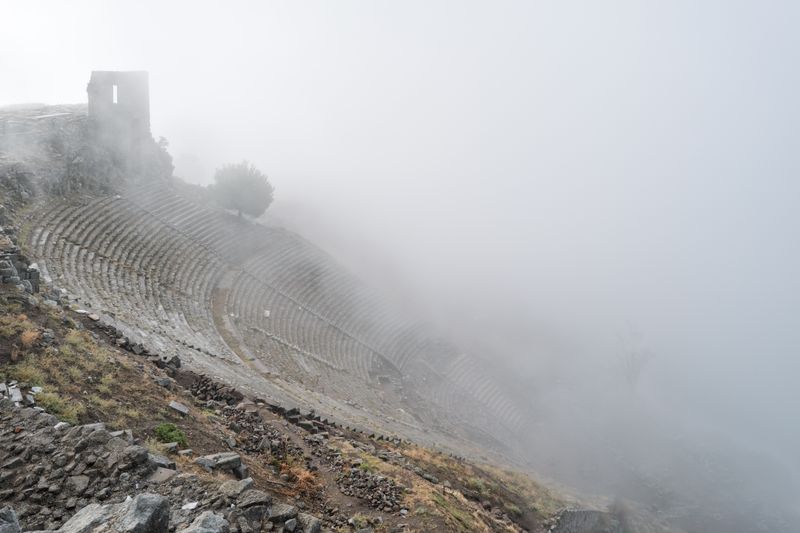
Pergamon (Bergama)
North of İzmir, a Hellenistic capital built along the spine of a steep hill: the steepest ancient theatre known, the library that gave us the word parchment, and an ancient healing centre on the plain below.
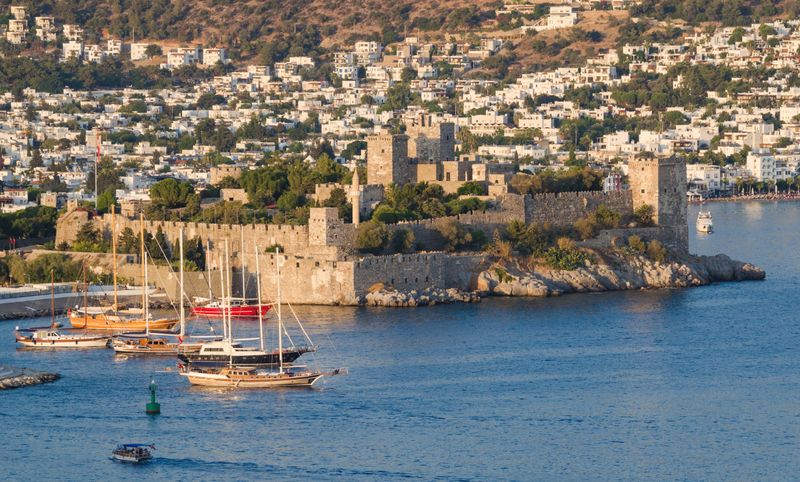
Bodrum
A whitewashed harbour town built over ancient Halicarnassus: the site of one of the seven wonders of the ancient world, and a crusader castle housing a museum of underwater archaeology.