 TürkiyeCennet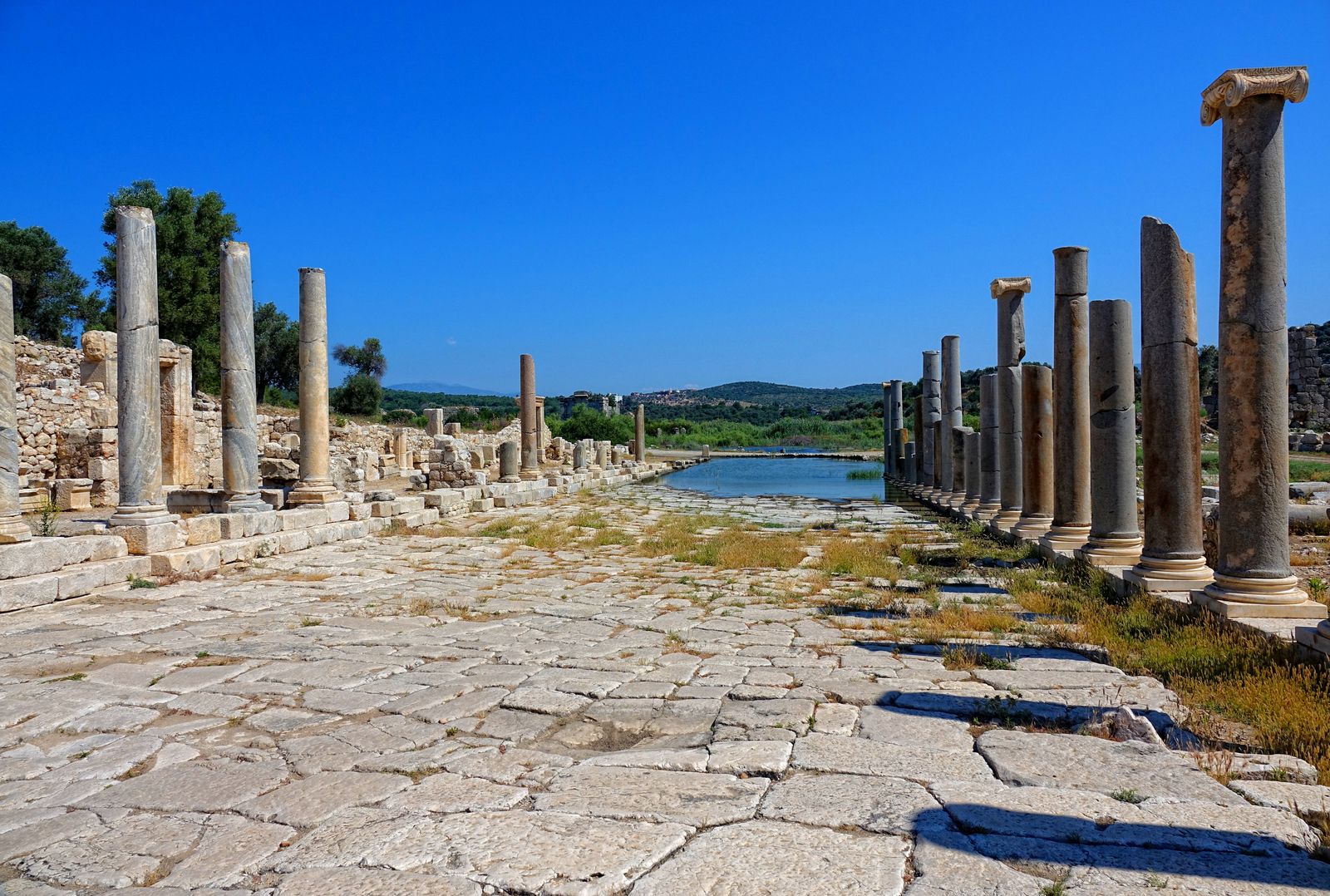
Patara
MediterraneanAntalya36.2680, 29.3167
Photo: Bjørn Christian Tørrissen · CC BY-SA 4.0 · source
An ancient Lycian city merging with one of Türkiye's longest beaches.
Why it is worth visiting
Patara is often remembered for its long beach, but what really gives it its identity is the wide ancient city stretching behind the dunes. As the capital of the Lycian League, Patara is one of the rare places that brings history and nature together in a single visit.
Its role in the Lycian League
Because Patara was the only outlet to the sea in the Xanthos valley, it stood for centuries as the region’s most important harbour and the capital of the Lycian League. The city’s most striking structure is the council building where the assembly of the Lycian League met; uncovered by excavation in 1991, it has been restored as one of the oldest known parliament buildings in the world.
The fabric of the city
Alongside the council building, the theatre, the monumental gate and the colonnaded main avenue still convey the scale of the city. Over the centuries sand has buried part of the structures, which is why excavation and visiting today run among the dunes. The city also holds a particular place in Christianity: Saint Nicholas, known as Santa Claus, is held to have been born in Patara.
Ancient city and beach
The beach that begins just behind the ancient city runs for kilometres and is one of Türkiye’s longest. This combination makes Patara neither just a beach nor just an archaeological site, but a whole you can walk across in a single day.
Conservation and planning
Patara beach is also an important nesting ground for loggerhead sea turtles. For that reason the hours of access to the beach and the rules relating to the nesting season can change with the season. There is little shade, so early morning is best both for avoiding the heat and for seeing the city quietly. It is worth checking current entry and visiting conditions with the official source.
The visit
The best way to see Patara is to combine the ancient city and the beach in a single walk. After the entrance, you can follow the main avenue, see the council building and the theatre, and then descend to the beach behind the dunes. Because the site is large, it is worth not rushing and setting aside at least half a day. There is very little shade, so early morning is best both for avoiding the heat and for seeing the city quietly. Water, a hat and comfortable shoes are clearly useful in this open area. Given that the beach is a nesting ground, keeping to the marked sections and to the hours of access matters.
Nearby
Together with Xanthos and Letoon on the UNESCO World Heritage List, Patara forms a short history route. Kalkan and Kaputaş Beach are neighbouring stops to the west along the same road.
Sources and last reviewed
- Patara Archaeological Site — Republic of Türkiye Ministry of Culture and Tourism — muze.gov.tr
- Xanthos-Letoon (UNESCO World Heritage) — Republic of Türkiye Ministry of Culture and Tourism — Directorate General of Cultural Heritage and Museums
Last reviewed:
Fees, hours and seasonal rules can change; confirm with the official source before visiting.
- Best time
- April–October; mornings avoid the midday heat.
- How to get there
- Via Gelemiş village; nearest airport is Dalaman.
- Coordinates
- 36.268, 29.3167
- Nearby
- Kalkan · Kaputaş Beach · Xanthos
Places nearby
Within about 50 km of here:
- Kaputaş Beach11 km
- Saklıkent Gorge25 km
- Ölüdeniz36 km
Places in this region
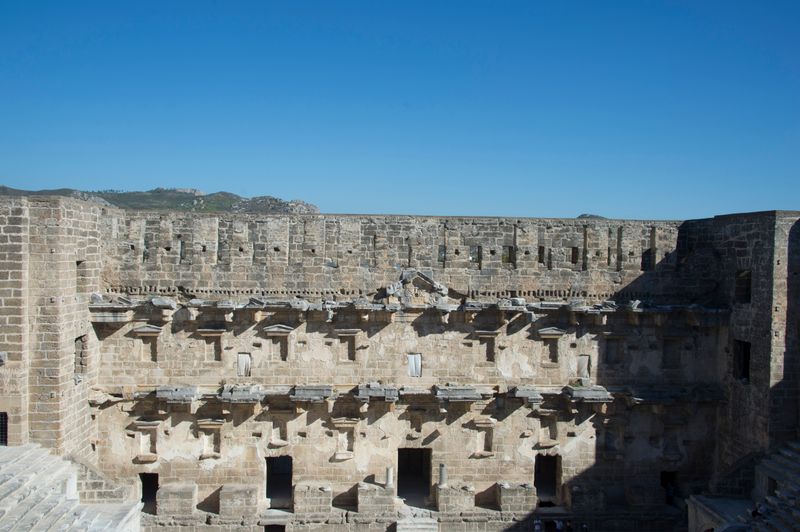
Aspendos
An ancient city home to one of the best-preserved Roman theatres in the world.
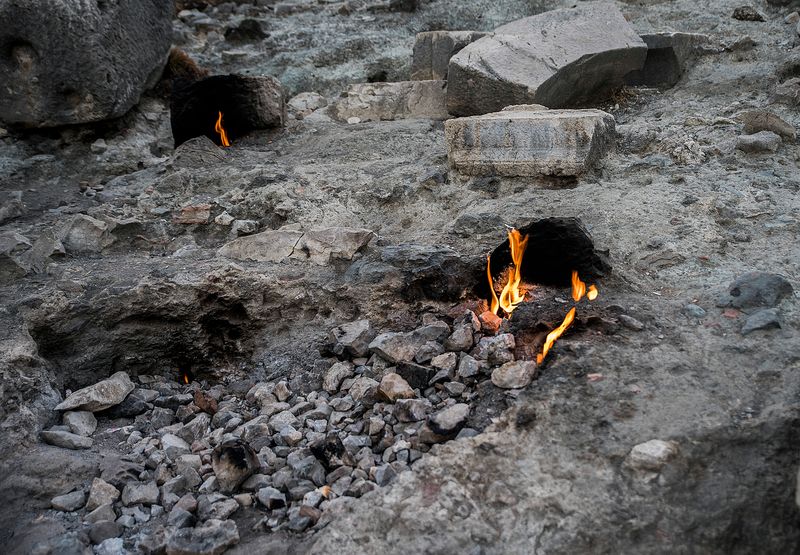
Çıralı & Yanartaş
A sea-turtle nesting beach, ancient Olympos, and natural flames rising from the rock.
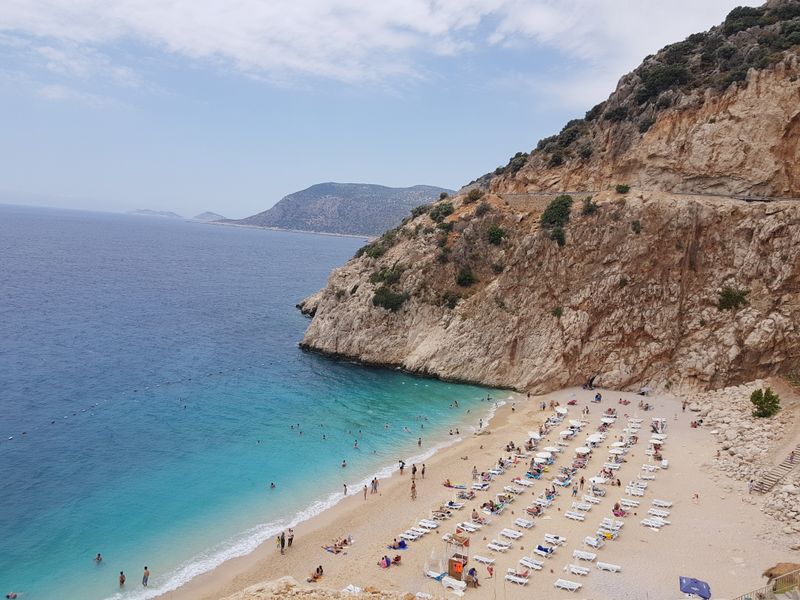
Kaputaş Beach
A turquoise cove hidden between steep cliffs on the road from Kaş to Kalkan.